Unit 4 - Contextual & Critical Awareness
Monday 29th October 2018
Evolution Of 2D Platformer
Today, we learned about verbs in platformer video games. Platformers are games where the player has to traverse through different platforms laid out to create a challenge for the player to reach the end goal. In the context of games, a verb is defined as an action that can be performed by the player, e.g jumping. In addition, versatile verbs are actions the player can perform that can lead to multiple outcomes depending on how or when they use the verb.
We also explored tutorials in games, where they introduce the mechanics of the game involving verbs and level construction.
Sonic The Hedgehog (1991-1994)
We analysed the Sonic The Hedgehog trilogy and how they teach the player features and controls of the game. The game first starts with the player imminently shown 2 features in the top left corner of the screen: a ring counter that implies there will be collectables and a timer implying there could be a possible time limit or that it’s involved with a rating system.
As you start to play the first level of Sonic 1, you are placed in a beginner friendly environment that lacks any prohibiting obstacles, allowing the player to figure out how the controls work.

The game uses the level layout as a tutorial; designing it in a way where the player can learn what they need to know from practice rather than text. Thus, it shows us what to do rather than telling us; this is what you call an invisible tutorial. There are items that are purposely placed above Sonic, thus influencing the player to try and jump in order to reach it. This teaches the player how to use the jump verb.

Right after this, the game presents its first enemy, a robotic ladybug, which slowly moves to the player's hitbox. At this point, there are 3 possible outcomes. The player may not react and get hit, teaching them that enemies can hurt Sonic, they may avoid the enemy or attack the enemy. Both of the latter options will teach the players different outcomes from using the same verb; jumping and attacking.

The game uses the level layout as a tutorial; designing it in a way where the player can learn what they need to know from practice rather than text. Thus, it shows us what to do rather than telling us; this is what you call an invisible tutorial. There are items that are purposely placed above Sonic, thus influencing the player to try and jump in order to reach it. This teaches the player how to use the jump verb.

Right after this, the game presents its first enemy, a robotic ladybug, which slowly moves to the player's hitbox. At this point, there are 3 possible outcomes. The player may not react and get hit, teaching them that enemies can hurt Sonic, they may avoid the enemy or attack the enemy. Both of the latter options will teach the players different outcomes from using the same verb; jumping and attacking.

On the second instalment of the trilogy, Sonic the Hedgehog 2, the player starts in a very similar way as when they started the first level in the first game; placed in a beginner-friendly environment. It also introduces new game mechanics, such as extra physics elements such as pushing you back when you jump on slopes. And this game also introduced a new move called the "spin dash". This represents the jumping verb becoming more versatile as it requires the same verb to jump in conjunction with the directional button leading to a new outcome.


Sonic 3 was introduced with a cut scene (different to the others) and then again put the player in a simple setting. This level introduces a more interactive environment at one part when the platform collapses. The fast reacting players will react and be forced to jump to the swings which are a new way to interact with the setting

Sonic Generations(2011)
Sonic Generations is the 10th instalment of the modern Sonic era and was released on Sonic's 20th anniversary. The modern sonic era is used to describe how Sonic has changed since 1998 as Sonic's design changed and transitioned from 2D to 3D. However, Sonic Generations gimmick was to go back to the classic Sonic's gameplay and 2D perspective.
Similar to Sonic 1, Sonic Generations starts off with a simplistic environment. As the player will see from that point, there is a small creature called Omo Chao that, when touched, hovers around the player and gives them verb advice on the verbs in the game. The game also places rings above Sonic, again encouraging the player to jump to collect them.

The player will eventually learn the spin dash (which was introduced in Sonic 2) by either trial and error or by the Omo Chao telling them. Having to press and hold square. Which differs from the classics where all the controls were embedded to one button.

Also at the start of the level, the first enemy is introduced. This was to teach the player that they can damaged Sonic and/or that the player can kill them by jumping on them.


Overall, Sonic Generations teaches the player in a very similar way to how the first 3 Sonic games did, allowing the player to learn things by themselves. However, the difference is that Generations added the Omo Chao, that tells the player all the verbs and what they do. I believe this addition was unnecessary as it teaches things that players can and would learn themselves and it nullifies the experience. But what the game does do better is placing the verbs Sonic could do in the classics through the different buttons. This allows the player to be more versatile with their verbs, such as using the jump button (X) while in a spin dash (square).
Today we did more analysis on games, going over 4. And we learned a new term, sub-genre when one genre of a game takes elements of other genres.
Oddworld: Abe's Oddysee
We started off by analysing this game as a class. This game uses a combination of text and level layout to teach the player the mechanics of the game. Oddworld: Abe's Oddysee is a Platformer, Puzzle game about a person called Abe who tries to escape his enslaved life to avoid being killed and eaten.
The game starts off with a simplistic area with pixelated text on the top, informing the player of the first verb being R1 to run.

Then they player traverses through the level until a point where a Slig, an enemy, pops out and attempts to shoot Abe. The player may either get hit and learn that Sligs can shoot and kill you, or the player may react in time by jumping which is also told to the player with text.

Then the player inevitably learns that covering behind things like walls can protect them from gunfire as a Slig shoots at Abe but is blocked by a wall. At the same time, its shown that the game has areas in the form of doors that can lead the player to different positions on the screen, creating a parallax effect.

Then they player traverses through the level until a point where a Slig, an enemy, pops out and attempts to shoot Abe. The player may either get hit and learn that Sligs can shoot and kill you, or the player may react in time by jumping which is also told to the player with text.

Then the player inevitably learns that covering behind things like walls can protect them from gunfire as a Slig shoots at Abe but is blocked by a wall. At the same time, its shown that the game has areas in the form of doors that can lead the player to different positions on the screen, creating a parallax effect.


Then the player learns how to leap by pressing triangle and that it's needed to leap over pits. This is where the player also learns there are hazards like mines and that they must be avoided.

Then the player is told how to sneak with the button R2 with text but also pitting the player in a position where they must sneak so Abe doesn't wake up a Slig. If the player does wake him up, it will show them that the Slig can hit the N.P.Cs.

After this, the player encounters another N.P.C, a character that resembles Abe's model that is controlled by the AI. By the N.P.C, there is a leaver that is designed to prompt the player to presses it with the action button, square, that was introduced. The player has 2 choices. If they give in to the prompts and activate the leaver, they will see the N.P.C fall to its death. This will allow them to find out that they must be vigilant with their actions as some may cause misfortune events. Or, the player may go back to the area with the Slig and another N.P.C. Depending on how the character moves, they may learn that troopers can kill the N.P.Cs. After they deal with the trooper, the player will see another leaver that clears the paths for them to continue the level. Teaching the player that they must scrutinize future areas to make sure the actions will lead to their goal.

Then the player is told how to sneak with the button R2 with text but also pitting the player in a position where they must sneak so Abe doesn't wake up a Slig. If the player does wake him up, it will show them that the Slig can hit the N.P.Cs.

After this, the player encounters another N.P.C, a character that resembles Abe's model that is controlled by the AI. By the N.P.C, there is a leaver that is designed to prompt the player to presses it with the action button, square, that was introduced. The player has 2 choices. If they give in to the prompts and activate the leaver, they will see the N.P.C fall to its death. This will allow them to find out that they must be vigilant with their actions as some may cause misfortune events. Or, the player may go back to the area with the Slig and another N.P.C. Depending on how the character moves, they may learn that troopers can kill the N.P.Cs. After they deal with the trooper, the player will see another leaver that clears the paths for them to continue the level. Teaching the player that they must scrutinize future areas to make sure the actions will lead to their goal.

As the player continues, they see a board on the screen that reveals that the game tallies the amount of N.P.Cs that die and escape. Indicating whatever happens with them may affect the game in a certain way.

Overall, the game teaches the player through text, trial and error and self-learning. I believe the way it does it is very effective as the text gives simple information and an easy amount to read, and the level design allows the player to learn many lessons while playing. The only thing that could be improved is the speed of text movement, so the player can read it a little faster or be read out so that any players who aren't eager to stop and read with miss the info.
Rayman (1996)
Rayman is a platformer game about a humanoid protagonist with no limbs but with floating appendages who has to defeat Mr Dark.
The game begins with a simplistic design. Straight away, the player can see a live count icon and a collectable count on the top corners of the screen, telling the player that they have limited attempts on the level and that there will be collectables.

Then items are shown above the characters, forcing the player to test out the verbs to see which will allow them to jump, X, in order to collect them.

The player then has to traverse through little platforms with water between them and enemies around. If the player makes a mistake, they will learn that water and enemies can damage/kill Rayman.

If the player attempts to use any other verb to deal with the enemies, they see Rayman can crouch using R1 or L1 and can make a taunt using Circle.

After 2 levels, a new verb activates for Rayman. Now using the button, square, the player can punch. At this point, Rayman is put in a screen where nothing disturbs him, allowing the player to practice using the punch button. This teaches the player that there are different verbs that may be unlocked later in the game.

Then player then continues the level where they learn that they can use the punch they just acquired, to kill enemies, knock down items that fall in the water and destroy boxes.


Then player then continues the level where they learn that they can use the punch they just acquired, to kill enemies, knock down items that fall in the water and destroy boxes.

Overall, I think Rayman starts off very beginner friendly, having a very simplistic environment that's isn't hard to go through and allows the player to experiment with the verbs and to see what they do. I believe it teaches the player effectively as it allows anyone to ease into the controls of the game regardless of their gaming skills.
Rayman Legends (2014)
Rayman Legends is the 7th instalment of the Rayman franchise. It keeps its platformer theme but embeds a bit of the beat 'em up genre with its extra focus on combat with enemies.
The game starts with throwing the player straight into a wide large environment.

Straight away, the game presents many interactive items; collectable objects and breakable objects. At the same time, there is text placed near specific parts that say what button is needed to interact with them. It prompts them to press Y to break an object, showing that it is the attack button, then it prompts the player to press X to reach a higher platform, teaching the player how to jump.


Straight away, the game presents many interactive items; collectable objects and breakable objects. At the same time, there is text placed near specific parts that say what button is needed to interact with them. It prompts them to press Y to break an object, showing that it is the attack button, then it prompts the player to press X to reach a higher platform, teaching the player how to jump.


Some interactable N.P.C's are placed above the player with their idle animation appearing they need the player's help. This gets the player to think more strategically, and may understand they need to combine the 2 verbs they just learned. Punch (Y) and jump (X). This teaches the player that they can be more versatile with their attacks.

You can also control Murfy, a character that helps Rayman and other playable characters traverse through platforms by tapping/swiping the screen with the Wiiu GamePad. The game helps you with him by having an animated hand present the motion needed to do the action.

Overall, Rayman Legends starts off teaching the player with the level layout and with small bits of text. This is an effective way of teaching the player as they are able to learn for themselves and the information it gives is easy to follow and lets the player know exactly how and when to use the verbs. However, there is one thing about the gameplay that I see as a flaw. If someone decides to play one player on the gamepad and play as Murfy, Rayman, or his friends, will traverse through the level, defeat all the enemies and collect all collectables by himself via AI control. This takes away the challenge of the game, giving the player only one thing to think about in the game.

Muramasa: Of the Demon Blade ( 2009)
Muramasa: Of the Demon Blade is a standard beat 'em up RPG about super-powered swordsmen.
As the game starts, the player has a choice to either do a tutorial or start the main game. If the player presses yes, then they will be put with an idle N.P.C while the game uses on-screen text to tell the player all the current verbs.
The verbs it presents are very versatile, with the analogue stick being used for all movements like running, jumping grouching and dodging.

Using the attack button (A) in combination with the analogue stick, the player can perform many other moves and combos.

The verbs it presents are very versatile, with the analogue stick being used for all movements like running, jumping grouching and dodging.

Using the attack button (A) in combination with the analogue stick, the player can perform many other moves and combos.

The game then tells the player of the last verbs, they only have one use making them the only non-versatile verbs.


After teaching the player all of this, the game then allows them to fight the N.P.C to test the things they learned.
Overall, the game uses a lot of text to teach the player. I believe this is not effective as the player is bombarded with a lot of information all at once which may confuse them and in the end, may still not know how to play the game. What I believe what would have been a better way would have been to let the player play the game and create different enemy types that require the player to use the different moves. This would allow them to learn in a more piratical way, instead of text that may repel cretin people from the game.
Super Mario Maker Workshop
Today we learned about the method Nintendo used, in 1985, to plan the levels they were going to make. They drew on grids in order to help create everything in a consistent scale and because back then games were in 8bits.
Our task was to plan on levels we were going to create on Super Mario Maker Workshop, using Nintendo's old method on a grid. This gives us a chance to input everything we learned and analysed in other games on how they teach the player about verbs and using invisible tutorials, teaching the player through the level design.

First, the player is placed on falling platforms that goes across the page. They are forced to run across until they reach the end of the row of falling platforms. Then they will then drop on a very thin platform. The player then has to jump to the next thin platform twice until they reach the point where the distance between the goes from 5 to 8 boxes. The player may fall due to the further distance. This will teach them sometimes regular jumps aren’t enough so they’ll learn to run jump that lets them go further. Then they have to follow the coins through the falling platforms to the regular platform. This is where the player will collect a coin above them that's under a mystery box. When this happens, they will activate the box. This will teach them that jumping under mystery boxes will take out whatever items are in it. This will help them with the next part.

Second, the player is then put at a pit. The player will first try opening the mystery box to see what’s in, they’ll see it’s a flower. Then they’ll go on the cloud and fly over the pit. They will be no obstacles at first but with coins that are placed high and low. This encourages the player to get used to the flying mechanics. Then eventually there will be fireballs coming from the pit, the player will use the time they got to practise flying to use timing to manoeuvre past them. Then there will be enemies which prompt the player to try different verbs and eventually find out that they can use the flower to attack the enemies. This will teach the player that acquiring certain items can help to kill enemies. Eventually, the player will reach another platform to which they will land on.

Third, the player will approach a large pit where they won't be able to see what's below, but they will be prompted to jump down anyway. When they do, they will see they have to do a run jump in order to reach the platform at the bottom.

Fourthly, the player nearly approaches the end with the goal in site. However, there are hazards that make it impossible for them to reach the goal viva bullets. With nothing else to do, the player will be forced to enter the tube and see where it leads to.

Fifthly, the player enters the secret area. The area will be filled with mystery boxes. The exit will be guarded with an enemy and due to the placement of the floor boxes, the player will be unable to jump on them to kill it. This will prompt them to open the mystery box that will stand out from the rest. The item in it will be a power up and when the player attempts to go past the enemy again, they will realise the powerup granted them invulnerability, turning off their hitbox. The player will then exit the secret area and go back to where they were before.
With the invincibility, the player will now be able to safely get to the goal without the hazards harming them. Once they reach the goal, the level is completed.
Evaluation
After we finished our designs, we made them on Super Mario Maker, presented them to the class and then got some feedback. The positive feedback we got was that it carried out a "leap of faith" theme well and how the last part guides the player to the area they need to go. The constructive feedback we got was to make sure the level was designed in a way that allows the player to pass it; as the size of the platforms at the start made it impossible for the player to pass it. Another one was to try and create more of a balance between the difficulty and the enjoyment of a level, as the way it was designed could possibly get some people to shy away from it due to frustration.
Contentiousness: How self-disciplined you are and how you organise yourself
Extraversion: How outgoing a social a person is
Agreeableness: How accepting and cooperative you are rather than suspicious and antagonistic
After you take a Big 5 Test ( a test that scales your pertinent in each one), you will be able to see your empathy levels that in all 4. This is used by many game designers in order for them to used Player Acting.
Player-Acting is when someone plays a game that the results of The Big 5 tests show that they have little empathy form, getting them to play for other reason rather than their own. This allows them to develop a more non-bias opinion and understanding why people like those games and then they embed that in their own to satisfy the mass audience.

Player-Acting
When I discovered my own Empathy Blind Spot, I saw that due to my preference for Hard games that require a lot of work and Exploring games that are In a Fantasy, I have an Empathy Blind Spot for games that are Easy, require little Work, are Realistic and features Construction in them.
Using the results, I had been chosen 3 games that are related to my Empathy Blind Spot. WarioWare: Smooth Moves and Little Big Planet 2.
After playing these games, I had to write about how the gameplay, controls and story would interest a player who better suited to the game.
WarioWare: Smooth Moves

Controls
Due to it being a WiiU game, the controls of the game requires little button inputs, with the only button being used is A to select options. When the player plays each level, there will be various tasks that the player will have to complete (in a short time limit) require different movements of the Wii remote. The game also labels the different ways of holding the remote in the best way for the task. Some may have them directing a cursor on the screen to having the playing shake the controller vigorously.


After teaching the player all of this, the game then allows them to fight the N.P.C to test the things they learned.

Overall, the game uses a lot of text to teach the player. I believe this is not effective as the player is bombarded with a lot of information all at once which may confuse them and in the end, may still not know how to play the game. What I believe what would have been a better way would have been to let the player play the game and create different enemy types that require the player to use the different moves. This would allow them to learn in a more piratical way, instead of text that may repel cretin people from the game.
Monday 5th November 2018
Super Mario Maker Workshop
Today we learned about the method Nintendo used, in 1985, to plan the levels they were going to make. They drew on grids in order to help create everything in a consistent scale and because back then games were in 8bits.
Our task was to plan on levels we were going to create on Super Mario Maker Workshop, using Nintendo's old method on a grid. This gives us a chance to input everything we learned and analysed in other games on how they teach the player about verbs and using invisible tutorials, teaching the player through the level design.

First, the player is placed on falling platforms that goes across the page. They are forced to run across until they reach the end of the row of falling platforms. Then they will then drop on a very thin platform. The player then has to jump to the next thin platform twice until they reach the point where the distance between the goes from 5 to 8 boxes. The player may fall due to the further distance. This will teach them sometimes regular jumps aren’t enough so they’ll learn to run jump that lets them go further. Then they have to follow the coins through the falling platforms to the regular platform. This is where the player will collect a coin above them that's under a mystery box. When this happens, they will activate the box. This will teach them that jumping under mystery boxes will take out whatever items are in it. This will help them with the next part.

Second, the player is then put at a pit. The player will first try opening the mystery box to see what’s in, they’ll see it’s a flower. Then they’ll go on the cloud and fly over the pit. They will be no obstacles at first but with coins that are placed high and low. This encourages the player to get used to the flying mechanics. Then eventually there will be fireballs coming from the pit, the player will use the time they got to practise flying to use timing to manoeuvre past them. Then there will be enemies which prompt the player to try different verbs and eventually find out that they can use the flower to attack the enemies. This will teach the player that acquiring certain items can help to kill enemies. Eventually, the player will reach another platform to which they will land on.

Third, the player will approach a large pit where they won't be able to see what's below, but they will be prompted to jump down anyway. When they do, they will see they have to do a run jump in order to reach the platform at the bottom.

Fourthly, the player nearly approaches the end with the goal in site. However, there are hazards that make it impossible for them to reach the goal viva bullets. With nothing else to do, the player will be forced to enter the tube and see where it leads to.

Fifthly, the player enters the secret area. The area will be filled with mystery boxes. The exit will be guarded with an enemy and due to the placement of the floor boxes, the player will be unable to jump on them to kill it. This will prompt them to open the mystery box that will stand out from the rest. The item in it will be a power up and when the player attempts to go past the enemy again, they will realise the powerup granted them invulnerability, turning off their hitbox. The player will then exit the secret area and go back to where they were before.
With the invincibility, the player will now be able to safely get to the goal without the hazards harming them. Once they reach the goal, the level is completed.
Evaluation
After we finished our designs, we made them on Super Mario Maker, presented them to the class and then got some feedback. The positive feedback we got was that it carried out a "leap of faith" theme well and how the last part guides the player to the area they need to go. The constructive feedback we got was to make sure the level was designed in a way that allows the player to pass it; as the size of the platforms at the start made it impossible for the player to pass it. Another one was to try and create more of a balance between the difficulty and the enjoyment of a level, as the way it was designed could possibly get some people to shy away from it due to frustration.
Monday 12th November 2018
Developing Player Empathy Through Research
Today we learned about the ways Games Designers produce games that can suite a large number of people. One of the main ways they do this is by developing Player Empathy.
Player Empathy is a large spectrum of how people play games and why. Games Designers using this to overcome their own personal bias, in order to create a game that many people can enjoy and suit their different tastes and experience types.
In order to help develop Player Empathy, most Games Designers participate in Player Acting.
Player Acting is when someone plays a game that is normally less appealing to them to develop a more empathized opinion and viewpoint of said game to develop an understanding of why people like the game.
We looked at 3 different Psychological Maps Games Designers use to identify players.
We looked at 3 different Psychological Maps Games Designers use to identify players.
Richard Bartle is a Game Designer who has studied the different types of gamers and believes anyone who games no matter their tastes or background will fall in one of these four categories. The graph is named after him.

The Four Fun Keys is another concept made by Nicole Lazzaro, who also believed gamers could be split in 4 categories but instead of focusing on what people do in games, looks at the emotional response it gives and explains why people play the particular game.

The Big Five
The Big Five is a concept that has been made by and studied upon, many different Physiologists that break down the different kind of people. A man called Jason Vandenberghe was very interested in it and used it himself to try and see why people play games.
The graph itself appears as a mix between the Battle Types and the Four Fun Keys, breaking down the different kinds of players in detail and also shows the moods some games can bring.

4 Domains Of Play
The 4 Domains Of Play derive from The Big 5. It impacts the categories into 4 language devices.

The Four Fun Keys is another concept made by Nicole Lazzaro, who also believed gamers could be split in 4 categories but instead of focusing on what people do in games, looks at the emotional response it gives and explains why people play the particular game.

The Big Five
The Big Five is a concept that has been made by and studied upon, many different Physiologists that break down the different kind of people. A man called Jason Vandenberghe was very interested in it and used it himself to try and see why people play games.
The graph itself appears as a mix between the Battle Types and the Four Fun Keys, breaking down the different kinds of players in detail and also shows the moods some games can bring.

4 Domains Of Play
The 4 Domains Of Play derive from The Big 5. It impacts the categories into 4 language devices.
Openness To Experience: How open you are to new things
Contentiousness: How self-disciplined you are and how you organise yourself
Extraversion: How outgoing a social a person is
Agreeableness: How accepting and cooperative you are rather than suspicious and antagonistic
After you take a Big 5 Test ( a test that scales your pertinent in each one), you will be able to see your empathy levels that in all 4. This is used by many game designers in order for them to used Player Acting.
Player-Acting is when someone plays a game that the results of The Big 5 tests show that they have little empathy form, getting them to play for other reason rather than their own. This allows them to develop a more non-bias opinion and understanding why people like those games and then they embed that in their own to satisfy the mass audience.

Player-Acting
When I discovered my own Empathy Blind Spot, I saw that due to my preference for Hard games that require a lot of work and Exploring games that are In a Fantasy, I have an Empathy Blind Spot for games that are Easy, require little Work, are Realistic and features Construction in them.
Using the results, I had been chosen 3 games that are related to my Empathy Blind Spot. WarioWare: Smooth Moves and Little Big Planet 2.
After playing these games, I had to write about how the gameplay, controls and story would interest a player who better suited to the game.
WarioWare: Smooth Moves
Story
WarioWare: Smooth Moves has a very trivial story. It’s not the main focus in the game and is split between many different characters each having their own cutscenes that are non-related to the other characters, making them quite episodic. This game would suit a Dabbler player more. Personally, as I’m mostly a Knight Player type, I don’t like games that have non-focused and simple stories.
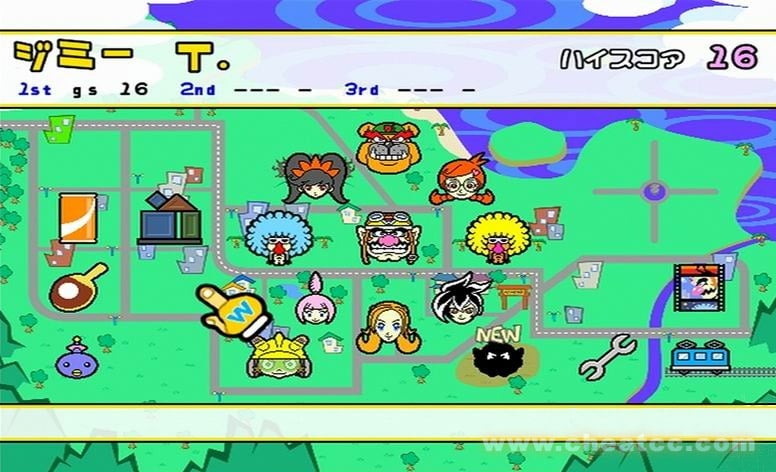
However, I do see why Dabblers would enjoy a game with this kind of story. Having a simple story means players won’t have to focus on it themselves, as games that have heavier stories require more attention and for you to be in the mood to play. While games with simple stories allow the player to entertain them in whatever mind frame they are in. Also because the story is cohesive and ongoing, it gives the game more replay value as it can be played again multiple times and due to the lack of much of a story, it won’t feel as repetitive.
Gameplay
In the game, the player just has to play juxtaposed minigames for each character's story. There is no explorable hub world. This is consistent throughout the rest of the game. As an Adventure type player, I don’t usually find this very interesting as a gameplay format.
However, simple gameplay like this might be pleasurable as it is simple and clear cut. Players who may prefer to play through the levels games fast without anything would like it like this, as it keeps a cohesive flow through the game.
Gameplay
In the game, the player just has to play juxtaposed minigames for each character's story. There is no explorable hub world. This is consistent throughout the rest of the game. As an Adventure type player, I don’t usually find this very interesting as a gameplay format.
However, simple gameplay like this might be pleasurable as it is simple and clear cut. Players who may prefer to play through the levels games fast without anything would like it like this, as it keeps a cohesive flow through the game.

Controls
Due to it being a WiiU game, the controls of the game requires little button inputs, with the only button being used is A to select options. When the player plays each level, there will be various tasks that the player will have to complete (in a short time limit) require different movements of the Wii remote. The game also labels the different ways of holding the remote in the best way for the task. Some may have them directing a cursor on the screen to having the playing shake the controller vigorously.
From playing this game, I see ways I can use it to help me with future game creation. I can add mini-games in them, that are easy and don't require much work from the player. Or possibly give the player a choice between two gameplay styles; an easy or hard one. This will cater to the Dabblers. If there are any cutscenes, I can give the player the option to skip them, this will cater to the Mechanics players.
Little Big Planet 2
Story
Little Big Planet 2 has quite a straightforward story with the cliché of the main protagonists defeating the villain. The story is cohesively ongoing through the game. Parts of the game are narrated by a voice who demonstrates particular mechanics of the game
This may be pleasing to some players as with a simple story, it would be very suiting to children and Mechanics players. In the game, is a 2D puzzle-platformer. The player will traverse through different levels and complete different challenges. The game also has different gameplay styles, going from puzzle focused levels to 2D shooting levels. The game also has a building feature, where the player can create their own levels. Here is when the player will be put on a blank map and the player will have the tools to manipulate it any way they want. I do like the gameplay as I prefer Fantasy games that go beyond Realism. I prefer Exploring games over Building ones.
They can also customise the character they are playing>However, while playing the game, I started to enjoy its building mechanics. I see that Imagineers like these types of games, as being able to build various things allows them to express their creativity. And being able to make your own levels allows the player to build the levels upon their own desires. This also gives the game a lot of replay value, as it gives the player something to do that would always be able to entertain them. The game is controlled through the controller and has general basic controls and most are explained to the player. With X being used to select things, circle to go to previous screens and square showing the players the tools they have. And the player is able to control particular bodily movements using the motion sensor in the controller. Also, if the player acquires it, can use the PlayStation I to take pictures of the level in the game for whatever purpose they have.
From playing this game, I see ways I can use it to help me with future game creation. I can give the player a feature of being able to construct their own levels if they want. This will cater to Builders while also still allowing Explores to play regular ready-made levels. Also, Little Big Planet 2 is also a platformer but also incorporates puzzles in it. I could also use that in my games, getting the player to solve challenges to progress through the level. This could cater to the Talent player type.


TATSUNOKO VS CAPCOM
TATSUNOKO VS CAPCOM is a crossover game between an anime TATSUNOKO, and a videogame company CAPCOM. I’m playing this game as a Lone Wolf player type

The game will have the player fighting against the computer or another player. Using the character's movesets in conjunction with each other to bring the other players life down.
At first, I played it by myself to get used to the controls.

The game allows up to 2 players to play, either by connecting multiple controllers or through online gaming. I usually prefer playing single player, as I like to go in my own pace being a Lone Wolf player type. Though, when playing the game with a classmate, I’ve seen many factors of why people enjoy multiplayer.

I asked why they prefer multiplayer games. They replied with that they enjoy the competition it encourages. By allowing two players to play against each other, there is a sense of thrill and excitement that keeps everyone playing entertained. They also said that it helps to create a teamwork theme, as the game allows you to tag team characters. This makes it feel like you are building your own personalised team in order to take down your opponent. I experienced that as I gained an attachment to certain characters and enjoyed using them as a team. They enjoy playing multiplayer on TATSUNOKO VS CAPCOM as playing others allows him to get a challenge in the game and eventually learn and develop his skills so they will be able to play better.
I then asked another classmate about what he likes about multiplayer. He talked about how he likes how it brings people together, as playing with each other it’s a good way to connect with people and share a common interest. He also states how it gives games more replay value, and it gets you to focus on the competition, rather than the game itself. I agreed with this as I found it much more enjoyable when playing with them then when I was playing it by myself. He liked playing against people in TATSUNOKO VS CAPCOM as he enjoyed having to use the simple but versatile controls in quick succession after each other in order to win.
Then I played with more of my classmates outside of the lesson, it was really fun to play as everyone had different gameplay styles. This made me have to think of different strategies to fight each person and it was very electrifying.
I also came up with my own opinion of it as well. I enjoyed the multiplayer for many reasons;
- It got me interested it play it a lot more, as this was my second time playing this type of fighting game in years so I felt compelled to practice by myself before I versus someone
- It also helped to keep my interest more. As unlike playing against the computer where everything is scripted, fighting another player means reach playthrough will be different and unique.
- Multiplayer also got me more competitive. As my teammate is able to analyse the way I’m fighting and defend accordingly, forcing me to play differently or get used to another character, increasing the joy of the game.
I can use this idea for the games I make. I can have a feature where more than one player can play at a time. Allowing them to play with, or against each other. This will cater to the Party Animal or Shepard player types.
Bibliography
Adam Brown. (25 Jan 2007). Wario Ware: Smooth Moves Image.Available: https://www.cheatcc.com/imageswii/wariowaresmoothmoves_2a.jpg. Last accessed 28/11/2018.
IMDb. (21 Apr 2018). Tatsunoko vs. Capcom Image. Available: https://www.imdb.com/title/tt1330056/mediaviewer/rm3993376768. Last accessed 28/11/2018.
Wednesday 21st November 2018
The Evolution Of 2D Games
We was set a task to make a presentation on the evolution of 2D games. We had to have
A brief timeline of video game hardware since 1983 (2-3 slides)
How has the Platformer genre evolved? Study two games from the same genre and highlight the differences. (2 slides)
Pick one other genre. How has it evolved over the last 30 years? Pick two games from the genre and identify the differences. How have the verbs, visuals and mechanics evolved? (2 slides)
And a Bibliography
We was set a task to make a presentation on the evolution of 2D games. We had to have
A brief timeline of video game hardware since 1983 (2-3 slides)
How has the Platformer genre evolved? Study two games from the same genre and highlight the differences. (2 slides)
Pick one other genre. How has it evolved over the last 30 years? Pick two games from the genre and identify the differences. How have the verbs, visuals and mechanics evolved? (2 slides)
And a Bibliography
We then presented it to the class and got some positive and constructive feedback. The positive feedback I got was that my presentation was well organised and that I managed to keep my focus thought it despite losing my words. The constructive feedback I got was to try to rehearse more, to display a bit more information on the slides and to try not to be too repetitive.
When making the presentation, I learnt a lot about the development of consoles of their population, features and the competition they had. For me, I felt like I didn't do as well as I planned. Similar from last time I did a presentation, I believe that my nerves made fail to present as best as I can. Although I think I realized one of the main things that causes this nerve. After I made the presentation, I made a script for it which I was going to read off but I didn't finish it in time. The part I presented with the script was the hardest part and where I was making the most mistakes but the part I had to improvise more was where I felt more comfortable and made fewer mistakes. This made me realize that by making a script and spending a long time making the slides look professional made me create subconscious expectations that caused me to become more and more nervous with every little mistake I made. Although when I didn’t have to use the script I was able to express more and be able to present without any set expectations, making it easier for me to talk and interact with the audience.
If I did this again, what I would do differently is to not focus too much in making the slides look as professional as it can be an instead should organise it in a way that’s best for me to cohesively read through with. I would not make a script but prepare a general stance of what I’m going to say, thus preventing me from worrying about forgetting words as I would be able to decide on them as I go on.


No comments:
Post a Comment